
Formulation & Troubleshooting
YDNRESIN troubleshooting content helps formulators investigate cure, compatibility, yellowing, bath stability, brittleness, durability and formaldehyde-related issues in amino-crosslinked systems.
Diagnose the system before changing the grade.
Crosslinker performance depends on binder functionality, formulation medium, catalyst, pH, storage condition, cure profile and the final substrate. This center organizes existing YDNRESIN technical content around the most common formulation symptoms and the checks that should come first.
Insufficient cure
Check first: oven temperature, dwell time, catalyst level, functional-group availability and crosslinker dosage.
Bath instability / precipitation
Check first: pH, resin compatibility, addition order, concentration, electrolyte load and storage time.
Yellowing
Check first: cure severity, catalyst type, substrate, auxiliary package and resin selection.
Hard or brittle hand
Check first: crosslink density, resin dosage, binder flexibility, softener compatibility and cure profile.
Poor wet / wash durability
Check first: degree of cure, binder compatibility, pickup, film formation and end-use test method.
Formaldehyde concern
Check first: resin free-formaldehyde level, complete formulation, catalyst, cure and final article test—not the resin number alone.
Use a repeatable troubleshooting sequence.
A controlled comparison is more useful than changing several variables at once.
- 01Define the symptomWhat changed, when, and under which process condition?
- 02Lock the baselineRecord binder, crosslinker, catalyst, pH, solids and additive package.
- 03Verify the cureConfirm actual substrate temperature and residence time, not only oven setpoint.
- 04Change one variableRun controlled trials and compare against the agreed test method.
Technical articles connected by symptom and formulation variable.

Low-Viscosity Melamine Resin for Impregnation: Why Viscosity Matters
Discover how melamine resin viscosity affects fiber wetting, penetration, resin pick-up, and manufacturing consistency. This technical guide examines the relationship between viscosity and solids…
Read article →
Melamine Resin for Glass Cloth Impregnation: YDN385L-60 Selection & Process Guide
Learn how viscosity, solids content, resin pick-up, drying and B-stage affect glass cloth impregnation, and how YDN385L-60 can be evaluated as a low-viscosity water-soluble…
Read article →
YDN385 for BoPET Waterborne PU Coatings: Application and Crosslinking Evaluation
Explore how YDN385, a high-imino water-soluble melamine crosslinker, can be evaluated in BoPET waterborne PU coating systems for adhesion, chemical resistance, hardness, flexibility, and…
Read article →
What Is High-Imino Melamine Resin? Chemistry, Cure Behavior and Applications
High-imino melamine resin is a reactive amino crosslinker used in thermosetting coating systems. This technical guide explains its chemistry, cure response, comparison with highly…
Read article →
Melamine Resin for Home Appliance Coatings: Improving Hardness, Gloss and Detergent Resistance
Why Do Home Appliance Coatings Require Balanced Performance? Home appliances are not only industrial products. They are also consumer products that remain visible and…
Read article →
High Viscosity Water-Soluble Melamine Resin for Textile Finishing | Low Formaldehyde Amino Resin Solution | YDNRESIN
YDNRESIN Develops Advanced High Viscosity Water-Soluble Melamine Resin Technology Enhancing Textile Finishing Performance with Low Free Formaldehyde and Improved Storage Stability With the global…
Read article →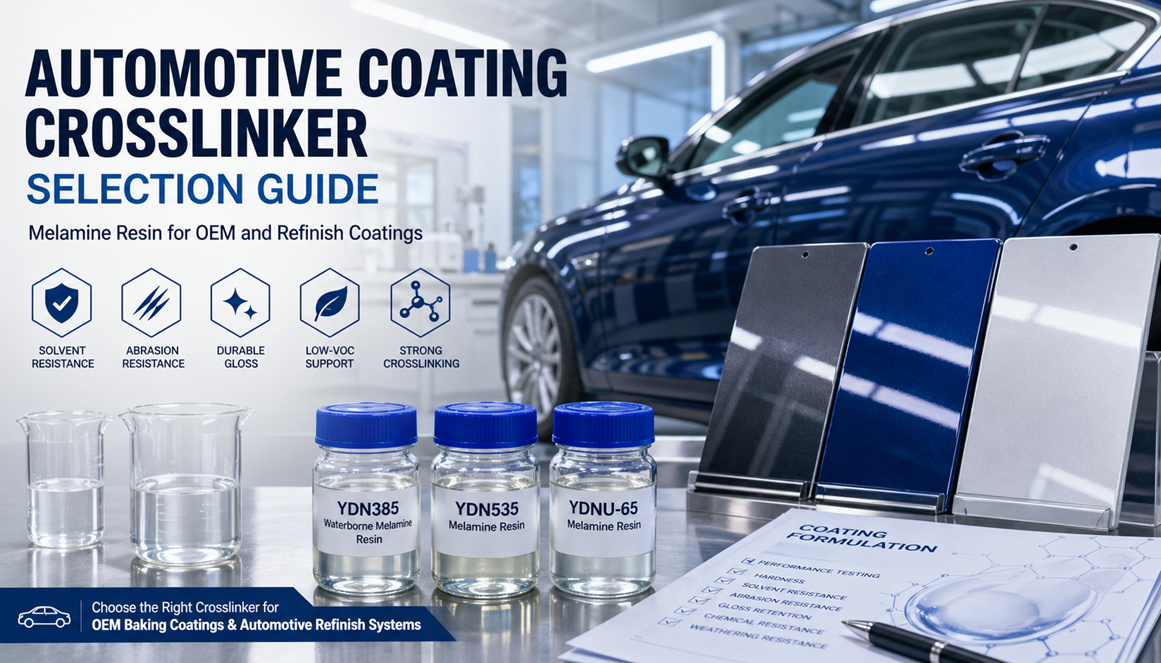
Waterborne Melamine Resin: Driving Low-Formaldehyde, High-Adhesion and Sustainable Metal Coating Solutions
YDNRESIN Launches Advanced Waterborne Melamine Resin Technology Enabling Low-Formaldehyde, High-Performance and Sustainable Metal Coating Solutions China, 2026 — YDNRESIN has announced the launch of…
Read article →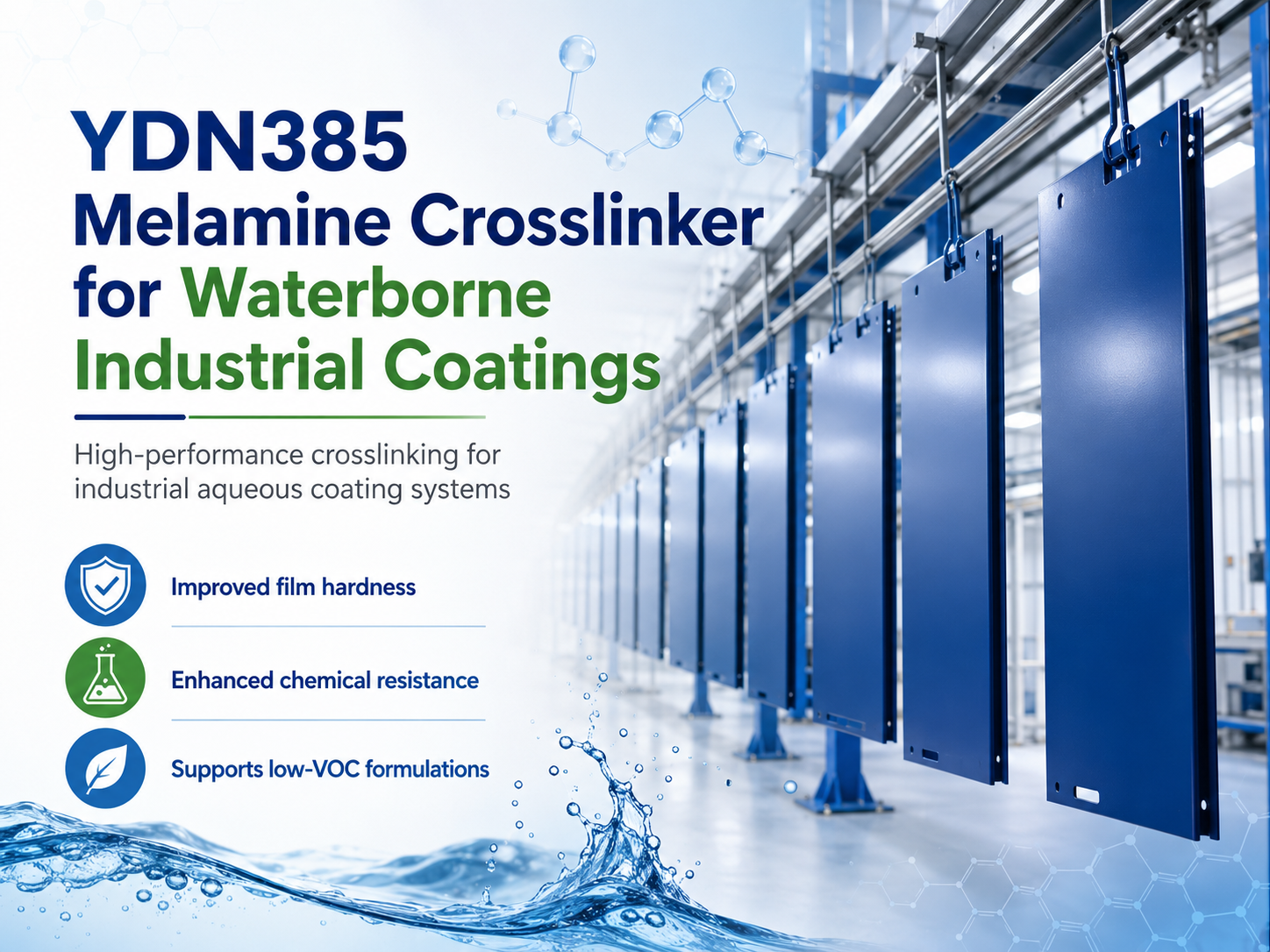
How Melamine Resin Improves Hardness and Solvent Resistance in Baking Paint
How Melamine Resin Improves Hardness and Solvent Resistance in Baking Paint Introduction In modern industrial coating applications, manufacturers are continuously seeking coating systems with…
Read article →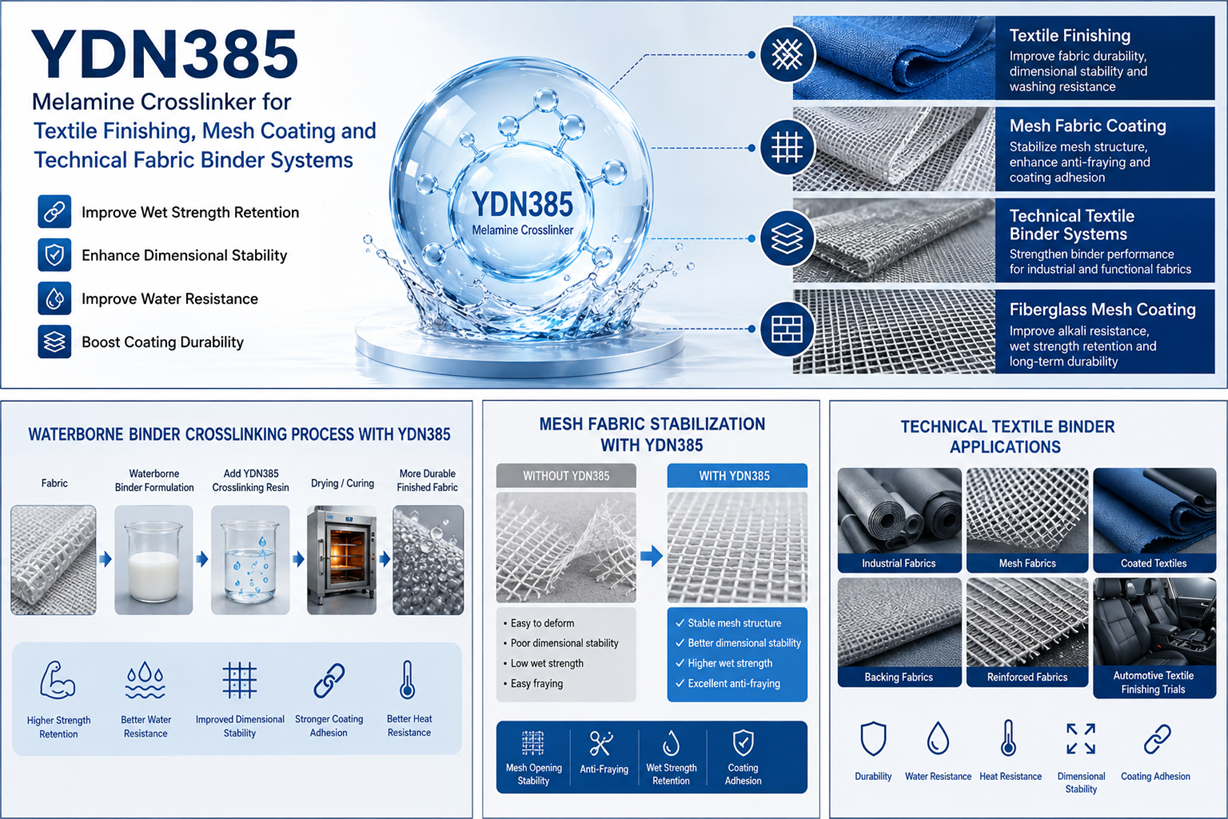
Melamine Crosslinker for Textile Coating: Improving Wet Strength and Coating Durability
Introduction Textile coating systems often require improved wet strength retention, coating adhesion and long-term durability. In waterborne binder systems such as acrylic, SBR and…
Read article →
How to Improve Mesh Fabric Stabilization with Water-Based Binder and Crosslinking Resin
What Is Mesh Fabric Stabilization? Mesh fabric stabilization is a textile finishing process used to keep mesh fabrics stable in shape, size, and structure…
Read article →
YDN385 for Mesh Fabric Stabilization and Anti-Fraying Finishing
YDN385 for Mesh Fabric Stabilization and Anti-Fraying Finishing Mesh fabrics, net fabrics and open-structure textiles are widely used in industrial, agricultural, packaging, filtration, sports,…
Read article →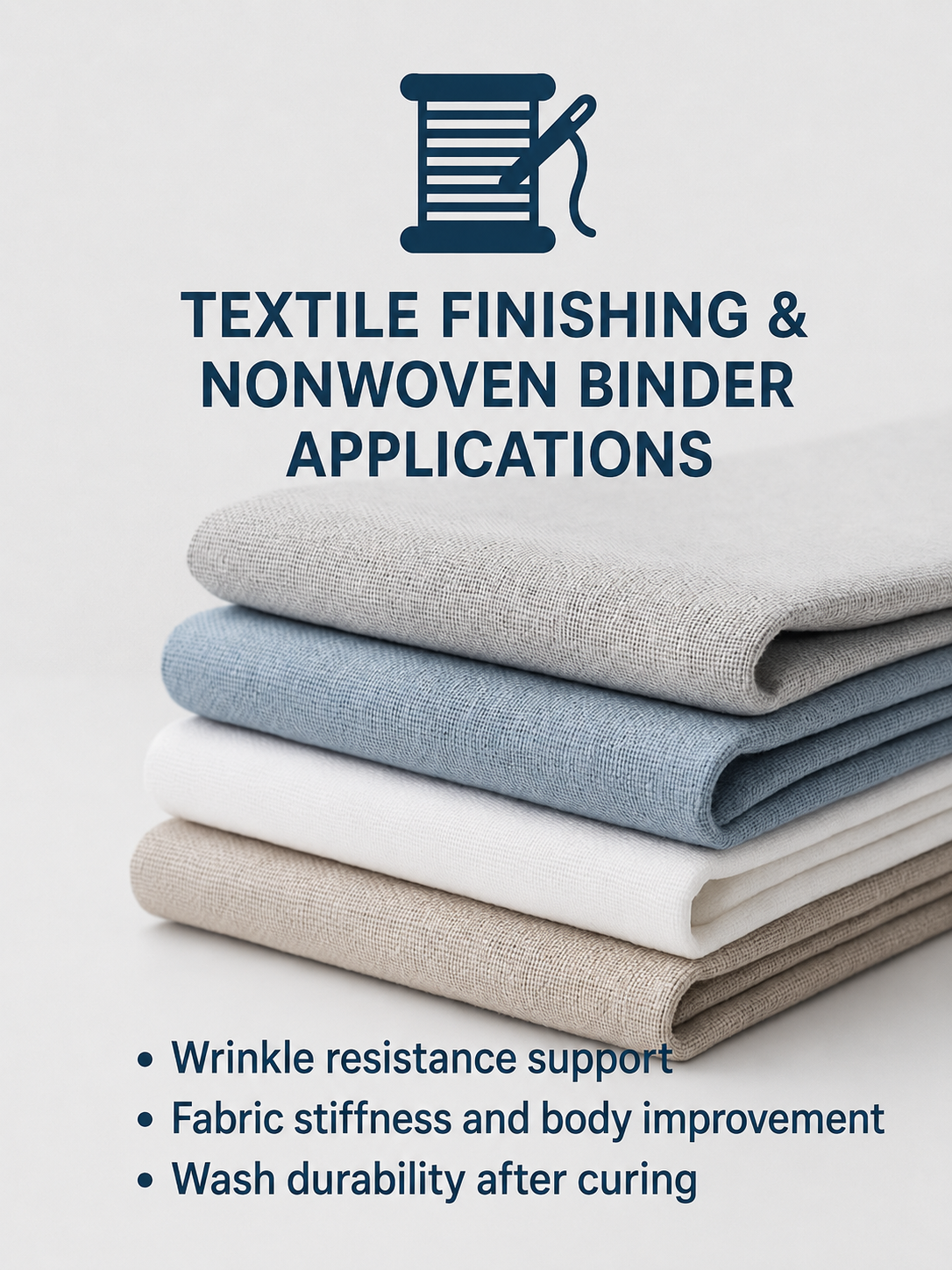
Melamine Resin for Textile Finishing: How to Choose the Right Water-Based Crosslinker
Melamine Resin for Textile Finishing: How to Choose the Right Water-Based Crosslinker Melamine resin for textile finishing is widely used in fabric finishing systems…
Read article →Send us the formulation context, not only the product code.
Include the binder, current crosslinker, dosage, pH, catalyst, cure schedule and the failed performance test.